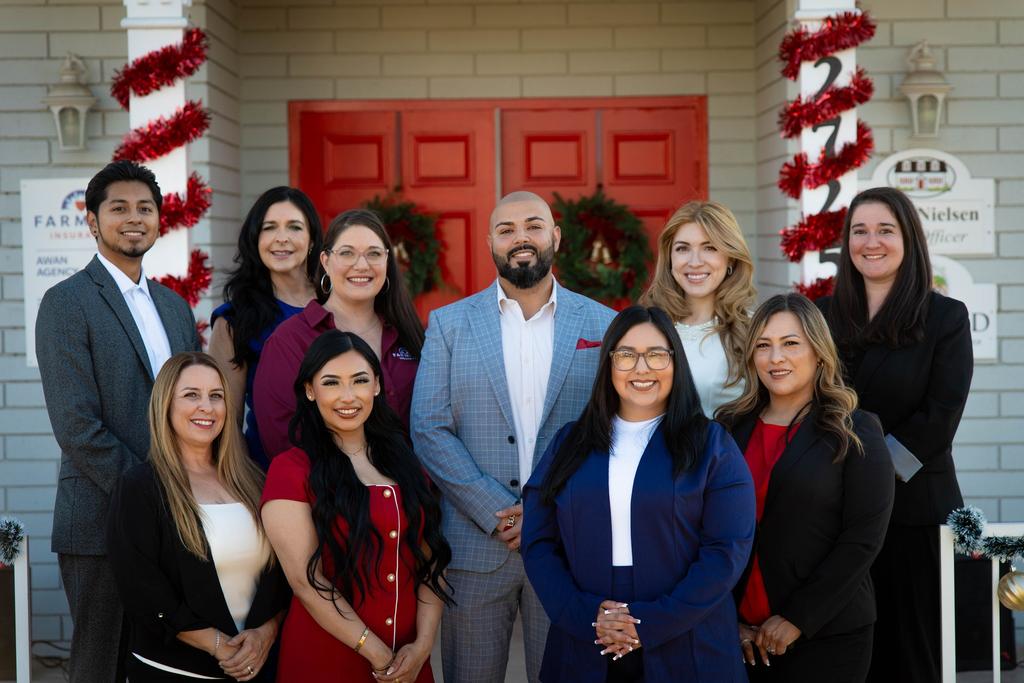
 By the Awan Insurance Team · Reviewed by Shahbaz Awan, Licensed California Insurance Agent (CA Lic #0H95098)
Looking for the best car insurance in Highland, California? It isn't a brand name. It's the right liability, uninsured motorist and comprehensive limits from a carrier that fits your driving record. Here's how to choose each piece and compare quotes without getting misled by the lowest number.
The best car insurance in Highland, California is the policy with the right coverage from a carrier that fits your record, not the lowest quote. Carry liability well above the 30/60/15 minimum, match uninsured and underinsured motorist limits to it, and keep comprehensive for wildfire, wind and theft. Then compare quotes with identical limits. Through Farmers and the Kraft Lake brokerage, we can quote carriers such as Mercury, Progressive and Safeco.
Maybe your renewal jumped, a new teen just got a permit, or you're simply tired of wondering whether your policy would hold up. Those are good reasons to look again. We'll walk through how we set each part of a car policy for a Highland household, using California's actual rules and what's specific about driving here.
What Does the Best Car Insurance in Highland Actually Look Like?
The best car insurance in Highland is the policy with liability, uninsured motorist and comprehensive limits that fit your life, written by a carrier whose rules fit your driving record.
When most people type "best car insurance" into a search bar, they mean the lowest price. We understand the pull of that. But a policy is only tested on the worst day, and the bare-bones version is usually the one that leaves you writing a check to someone else's lawyer. Here's what we actually check before price ever comes up.
Liability that protects you
Limits sized to what you own and earn, not just the 30/60/15 the state requires.
UM/UIM that actually pays
Uninsured and underinsured motorist limits set high enough to work when the other driver carries the minimum.
Comprehensive for fire and wind
The part that pays when a car parked near the foothills is burned, hit by a falling branch or stolen.
Collision you can afford to use
A deductible you could pay tomorrow without touching rent money.
A carrier that fits your record
Clean record, a ticket, a teen, a lapse — different carriers are built for different drivers.
Then price
Once the coverage is right, we work the premium down every way that doesn't cost you protection.
If you want the basics first — what each coverage part does and what California requires — our complete guide to auto insurance in Highland covers that ground. This article is about choosing: how to set each piece and how to tell two quotes apart.
How Does Driving in Highland Change the Coverage You Need?
Highland drivers log real freeway time and households here are large, which raises the stakes on liability limits and makes accurate mileage worth getting right.
Census figures show the average Highland commute runs about 30.4 minutes, and households here average 3.47 people. Nearly 28% of residents are under 18, which means a lot of future teen drivers growing up on these streets. Source: U.S. Census Bureau QuickFacts, Highland city →
Think about where those miles happen. A typical week here can mean the 210 toward San Bernardino and Rialto, a run down to I-10 through Redlands, the stop-and-go of Base Line and Greenspot Road, and, for plenty of families, SR-330 climbing out of town into the mountains. Each of those is a different kind of exposure: freeway speed, surface-street intersections, and a winding mountain grade where a slide into a guardrail or rock is a collision claim, as the Department of Insurance defines it. Source: California Department of Insurance →
Mileage matters to the price, too. Under Proposition 103, annual miles driven is the second factor in every California auto rate, right behind your driving record. If your commute changed, ended, or moved to a hybrid schedule, the mileage on your policy may be out of date. Source: Cal. Insurance Code §1861.02 →
How Much Liability Coverage Should a Highland Driver Carry?
Treat California's 30/60/15 minimum as the legal floor, then carry liability limits large enough to protect your home equity, savings and future wages.
The DMV minimum is $30,000 for one person's injury or death, $60,000 for injuries to more than one person, and $15,000 for property damage. Source: California DMV → Our explainer on the 30/60/15 requirements covers how those limits changed and what's coming next.
Here's the trouble with the minimum. Liability pays the other people when you cause a crash, and $15,000 of property damage doesn't go far against a newer truck or SUV. Anything above your limit can become a claim against you personally. For a homeowner in Highland, or a family with savings and a paycheck worth protecting, that's the exposure that matters most.
We start with what you'd stand to lose: equity in your home, savings, and income. Then we look at who drives — a household with a new teen driver carries more risk than a retired couple. If those numbers are large, we'll talk about a personal umbrella policy layered over your auto and home liability.
How Should You Set Uninsured and Underinsured Motorist Coverage?
Set uninsured and underinsured motorist limits to match your liability limits, because underinsured coverage only pays when your limit is higher than the at-fault driver's.
The Insurance Research Council estimates 20.4% of California motorists were uninsured in 2023, the 8th-highest rate in the country — a statewide figure, not a Highland one. Source: Insurance Information Institute (IRC study) → California law requires every auto policy to include uninsured motorist coverage unless you sign a written agreement to delete or reduce it. Source: Cal. Insurance Code §11580.2 → The Department of Insurance describes UM bodily injury limits as matching your liability limits, and notes that UM property damage pays up to $3,500 only if the uninsured driver is identified. Source: California Department of Insurance →
The underinsured part is where people get caught. Under the same statute, underinsured coverage starts only after the at-fault driver's liability limits are used up, and it pays up to your limit minus what their insurer already paid. If your limit equals theirs, there's nothing left for it to pay.
A driver carrying exactly 30/60/15 rear-ends you on the 210, and your medical bills and lost wages reach $90,000. Their policy pays its $30,000 per-person limit. If your UM/UIM is also 30/60, your underinsured coverage pays nothing — $30,000 minus $30,000. If you carry 100/300, it can pay up to $70,000 more, covering the remaining $60,000. These figures are illustrative, not a claim outcome; every claim depends on the facts and the policy.
For the full picture — passengers, hit-and-runs, and claim deadlines — see why uninsured motorist coverage is non-negotiable in California.
Why Does Comprehensive Matter for Cars Parked in Highland?
Comprehensive is the coverage that pays when a parked car is damaged by fire, wind, a falling branch, theft or vandalism, and Highland's foothill fire exposure makes it worth keeping.
The Department of Insurance lists the perils comprehensive covers: fire, theft, vandalism, windstorm, flood and falling objects. It doesn't cover mechanical breakdown or wear and tear. Source: California Department of Insurance → Liability won't pay for any of that, and neither will collision.
Highland's fire risk is part of the local map. The State Fire Marshal published Highland's Local Responsibility Area Fire Hazard Severity Zones map in March 2025, and the city posts it for residents to look up. Source: City of Highland → The region has lived through this before: in October 2003, the Old Fire in San Bernardino County burned 91,281 acres and destroyed 1,003 structures, according to CAL FIRE. Source: CAL FIRE → Santa Ana wind events bring the downed limbs and fast-moving fires that can turn a parked car into a claim — our guide to Santa Ana winds and insurance claims covers the home side.
| What happens to your car | Liability only | With comprehensive |
|---|---|---|
| Burned in a wildfire while parked | Not covered | Covered, less deductible |
| Branch falls on it in a windstorm | Not covered | Covered, less deductible |
| Stolen from the driveway | Not covered | Covered, less deductible |
| Engine wears out | Not covered | Not covered |
Dropping comprehensive on an older car can make sense when the car's value is low and you could replace it from savings. Just make that call on purpose. Our comparison of full coverage vs. liability only walks through when each one fits.
Which Car Insurance Carriers Fit Your Driving Record?
Carriers weigh records differently, so the right fit depends on your history — and California law ranks your driving record as the single biggest factor in every auto rate.
Proposition 103 requires auto rates to apply three factors in order of importance: your driving safety record, the miles you drive each year, and your years of driving experience. If you qualify as a good driver, the law entitles you to a Good Driver Discount policy priced at least 20% below what you'd otherwise pay, from the insurer of your choice. Source: Cal. Insurance Code §1861.02 → Qualifying generally means three years licensed, no more than one violation point in the past three years, and no at-fault accident causing injury or death in that window. Source: Cal. Insurance Code §1861.025 →
That's where market access matters. Awan Insurance is a Farmers agency, and Farmers is our primary carrier, along with the Farmers family companies Foremost and Bristol West. Through Kraft Lake, the brokerage available to Farmers agents, we can also quote carriers such as Mercury, Progressive, Safeco and National General. We match you to the market that fits your record, instead of fitting your record into one company's box. Direct and captive writers that sell only through their own channels aren't part of that panel.
| Your situation | What we look at first |
|---|---|
| Clean record, 3+ years licensed | Confirm the Good Driver Discount, then compare standard carriers on coverage and service |
| One ticket or a minor at-fault claim | How each carrier counts points and claims in its own rules |
| A new teen driver | Liability limits, car assignment and student credits — see adding a teen driver |
| A lapse, an SR-22 or a serious violation | Markets built for records outside standard guidelines, so you stay legal and insured |
Insure a home or rent in Highland too? A home and auto bundle is one of the easiest discounts to capture, and our Highland insurance guide covers every line together.
How Do You Compare Car Insurance Quotes in Highland the Right Way?
Compare quotes only after every one uses the same drivers, cars, limits and deductibles; otherwise the lowest number is usually just the thinnest coverage.
The Department of Insurance recommends getting several quotes, in writing, before you buy. Source: California Department of Insurance → Two state tools help you check what you're seeing. The CDI's 2026 auto premium comparison shows sample premiums for hypothetical drivers by area — a guide, not your price. Source: CDI Compare Premiums → And the CDI's Consumer Complaint Study ranks insurers by justified complaints per 100,000 policies, which tells you something about service after the sale. Source: CDI Consumer Complaint Study →
- Same liability limits on every quote — the number you chose, not each company's default.
- Same UM/UIM limits, matched to liability, not quietly reduced.
- Same comprehensive and collision deductibles on each car.
- Every licensed household driver listed, including a permit-age teen if your carrier asks.
- Honest annual mileage for your real commute.
- Good Driver Discount shown if you qualify.
- Extras compared line by line — rental reimbursement, roadside, medical payments.
For the full method, including why a quote can change after you buy, read how to compare California car insurance quotes. Or let us run it: our team can price the same coverage across Farmers and the carriers we reach through Kraft Lake and show you the differences side by side on our auto insurance page or across the desk on Messina Street.
The Bottom Line
The best car insurance in Highland, California is the policy that still works on the worst day: liability that protects what you've built, UM/UIM set high enough to pay when the other driver carries the minimum, and comprehensive for the fire, wind and theft risks that come with life near the foothills.
Get those right first, then let the carriers compete on price. That's the conversation we have every day a few minutes from our Messina Street office, and it starts with your current declarations page.
Insuring the house too? Our best home insurance in Highland guide covers fire zones and which carriers write local homes.
Related Questions
Is there one best car insurance company for Highland drivers?
No single company is best for everyone. The right carrier depends on your driving record, who's on the policy, your cars and the limits you need. A carrier that suits a driver with a clean record may not suit a household with a new teen or a recent ticket. That's why we compare several markets on identical coverage before recommending one.
How much uninsured motorist coverage should I carry in California?
We generally recommend matching your uninsured and underinsured motorist limits to your bodily injury liability limits. California law requires the coverage unless you sign a written waiver, and underinsured coverage pays only up to your limit minus what the at-fault driver's insurer paid. A limit no higher than the other driver's often leaves nothing to collect.
Does a long commute on the 210 change my car insurance?
It can. Annual mileage is the second factor California requires insurers to weigh, right after your driving record. A long daily freeway commute usually means more miles than a short local one. Report your real mileage, and update it when your job, schedule or commute changes, so your rate reflects how you actually drive.
Can one minor ticket cost me the Good Driver Discount?
A single one-point violation usually doesn't, by itself. California's Good Driver standard allows no more than one violation point in the past three years, along with three years licensed and no at-fault accident causing injury or death. A second point, or an at-fault property-damage accident on top of a ticket, can push you over. The lookback window is the past three years.
Why should every car insurance quote I compare use the same limits?
Because price follows coverage. A quote with 30/60/15 liability, no uninsured motorist coverage and a high deductible will almost always look lower than one built to protect you. Setting identical limits, deductibles, drivers and mileage on every quote is the only way to see which carrier is pricing the same policy for less.
Last reviewed October 2026 by Shahbaz Awan, Licensed California Insurance Agent (CA Lic #0H95098). Liability minimums checked against the California DMV; rating factors, Good Driver Discount and UM/UIM rules against the Insurance Code; Highland figures against U.S. Census QuickFacts.